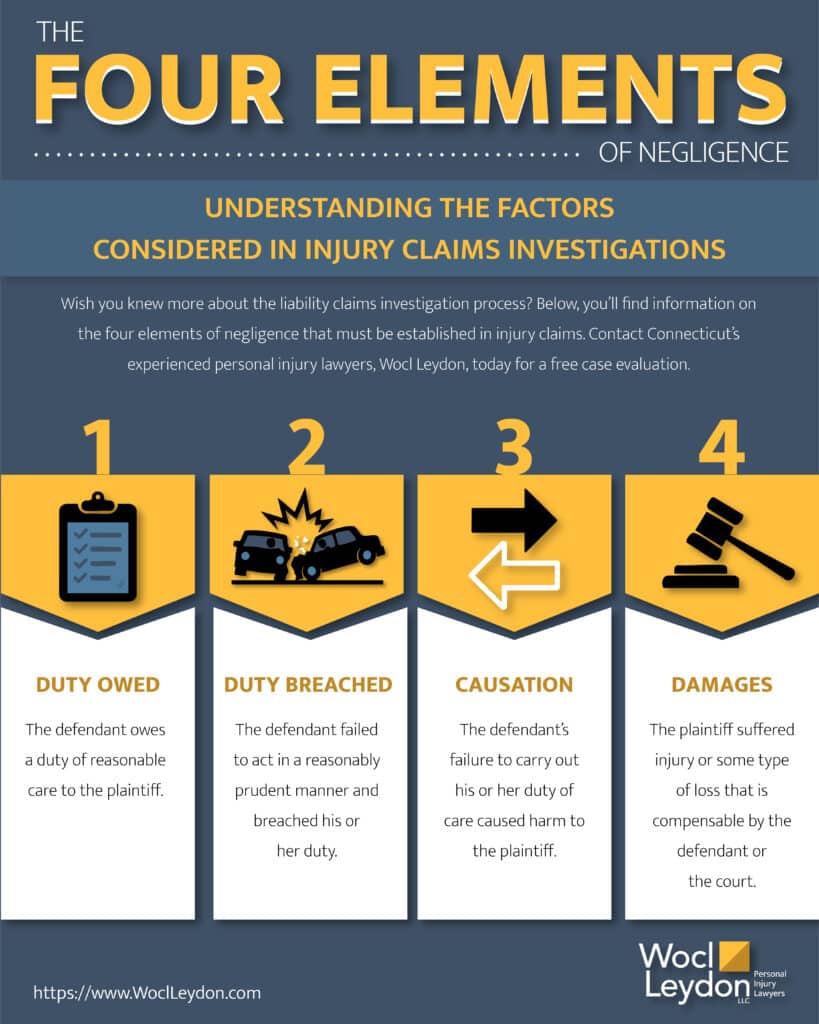
Introduction: The Foundation of Tort Law
Every successful personal injury claim rests on a single foundational legal doctrine: negligence. Under civil tort law, negligence occurs when an individual or entity fails to exercise the level of care that a reasonably prudent person would under similar circumstances, resulting in harm to another.
However, feeling that someone else was “at fault” is not enough to win compensation in court. To establish legal liability, the injured party (the plaintiff) must establish four distinct legal elements by a preponderance of the evidence (meaning it is more likely true than not).
This article details the four elements of legal negligence and explains the evidence required to build a winning claim.
1. Element 1: Duty of Care
The first step in proving negligence is establishing that the defendant owed the plaintiff a legal duty of care. A duty of care exists when the law recognizes a legal obligation between the parties requiring the defendant to conform to a certain standard of conduct to protect others from unreasonable risks.
           Common Legal Duty of Care Examples

  ┌────────────────────┬──────────────────────────────────┐
  │ Context            │ Legal Duty Owed                  │
  ├────────────────────┼──────────────────────────────────┤
  │ Motorists          │ Drive safely, obey traffic laws, │
  │                    │ avoid distraction.        │
  ├────────────────────┼──────────────────────────────────┤
  │ Property Owners    │ Maintain safe, hazard-free       │
  │ (Premises)         │ walkways for visitors.    │
  ├────────────────────┼──────────────────────────────────┤
  │ Medical Providers  │ Adhere to established medical    │
  │                    │ standards of care.        │
  └────────────────────┴──────────────────────────────────┘
Proving a duty of care is usually straightforward in motor vehicle accidents or premises liability cases, as established statutes and common law automatically impose these obligations.
2. Element 2: Breach of Duty
Once a legal duty is established, you must prove the defendant breached that duty through act or omission. A breach occurs when the defendant’s conduct falls below the standard of care expected of a reasonably prudent person.
Examples of Breach of Duty:
-
Motor Vehicle Incidents: Running a red light, driving under the influence, speeding, or texting while driving.
-
Premises Liability: Mopping a commercial hallway and leaving no warning signage, or ignoring known structural hazards like broken steps.
-
Product Liability: Manufacturing a household appliance with uninsulated wiring that poses an electrical hazard.
3. Element 3: Causation (Direct & Proximate)
Causation bridges the gap between the defendant’s breach of duty and your injuries. You must prove not only that the defendant acted carelessly, but that their specific actions directly caused your harm. Causation splits into two legal components:
┌────────────────────────────────────────────────────────┐
│               Two-Part Causation Test                  │
└──────────────┬──────────────────────────┬──────────────┘
               │                          │
               ▼                          ▼
      [Actual Cause]            [Proximate Cause]
      "Cause-in-Fact"           "Foreseeability"
      "But for" defendant's     Was the injury a natural,
      actions, injury wouldn't  foreseeable result of the
      have occurred.     breach?
-
Actual Cause (Cause-in-Fact): Tested using the “but-for” standard: “But for the defendant’s decision to run the red light, would the collision have occurred?” If no, actual causation exists.
-
Proximate Cause (Legal Cause): Focuses on foreseeability. Was the plaintiff’s harm a natural, foreseeable outcome of the breach, or did an unforeseeable intervening event cause the damage?
4. Element 4: Damages (Measurable Losses)
Finally, the plaintiff must prove they suffered actual, legally cognizable harm or losses (damages). If a driver runs a red light and narrowly misses your vehicle without causing physical injury, emotional shock, or property damage, negligence cannot be established because no damages exist.
Measurable damages include economic costs (hospital bills, lost income) and non-economic harm (physical pain, severe anxiety, permanent scarring).
5. Defense Strategies: Shared Fault Rules
In many accidents, defendants argue that the injured plaintiff contributed to the incident. How shared fault impacts your compensation depends on your state’s comparative fault rules:
| Negligence System | Legal Rule Description | Impact on Claim Recovery |
| Comparative Fault (Pure) | Plaintiff can recover damages regardless of their fault percentage. | Recovery is reduced by fault percentage (e.g., 20% at fault = 80% payout). |
| Modified Comparative Fault (50/51% Bar) | Plaintiff can recover only if their fault is below 50% (or 51% depending on state). | Recovery reduced by fault percentage; zero payout if fault equals or exceeds threshold. |
| Contributory Negligence | Strict rule used in a few jurisdictions. | If plaintiff contributed even 1% to the incident, recovery is completely barred. |
Summary Checklist for Proving Negligence
To build a solid negligence case, your attorney will compile:
-
Official police, accident, or incident reports.
-
Eyewitness statements and deposition transcripts.
-
Traffic camera, dashboard, or security video footage.
-
Detailed medical records linking the accident directly to your physical condition.
-
Testimony from medical and accident reconstruction experts.