Introduction: The Core Dilemma of Estate Planning
When preparing an estate plan, the most crucial decision is choosing between a Last Will and Testament and a Revocable Living Trust. While both legal instruments dictate how your property and financial assets will be distributed after your death, they function differently under state probate laws.
Many individuals mistakenly believe that having a written will completely avoids court interference. In reality, a will is designed to serve as instructions for the probate court, making public court oversight mandatory. Conversely, a properly funded revocable living trust operates as a private legal entity, allowing your beneficiaries to bypass the lengthy, expensive probate process entirely.
This comprehensive guide breaks down the legal differences between trusts and wills, helping you determine which structure aligns with your financial goals and family dynamics.
1. Understanding the Last Will and Testament
A Last Will and Testament is a legal document that outlines your final wishes regarding the distribution of your property, the appointment of an executor, and the nomination of legal guardians for minor children.
┌────────────────────────────────────────────────────────┐
│             Legal Mechanics of a Last Will             │
└──────┬──────────────┬──────────────┬───────────┬───────┘
       │              │              │           │
       ▼              ▼              ▼           ▼
  [Testator Signs] ➔ [Death Occurs] ➔ [Filed in Court] ➔ [Probate Process]
  Document executed  Valid upon      Becomes public      Court-supervised
  with witnesses     death           record              asset transfer
Key Legal Features of a Will:
-
Takes Effect Only Upon Death: A will has no legal authority during your lifetime. It cannot manage your assets if you become incapacitated due to illness or injury.
-
Requires Court Probate: To transfer title ownership of real estate, bank accounts, or investments held solely in your name, your executor must petition the probate court to validate the will.
-
Public Record: Once filed with the probate court, your will becomes a matter of public record, accessible by anyone, including creditors and disgruntled relatives.
-
Designates Guardianship: A will is the only legal document where you can legally nominate guardians for your minor children.
2. Understanding the Revocable Living Trust
A Revocable Living Trust is a legal fiduciary arrangement created during your lifetime. As the grantor (or settlor), you transfer ownership of your assets—such as real estate, bank accounts, and investment portfolios—into the name of the trust.
┌────────────────────────────────────────────────────────┐
│             Legal Structure of a Living Trust          │
└──────┬──────────────────────────────┬──────────────────┘
       │                              │
       ▼                              ▼
  [Grantor / Settlor]            [Trust Assets]
  Creates and funds trust        Real estate, bank accounts,
       │                         business equity transferred
       ▼                         into trust legal title
  [Successor Trustee] ─────────► [Beneficiaries]
  Manages assets upon            Receive private distributions
  death/incapacitation           without court oversight
Key Legal Features of a Living Trust:
-
Active During Your Lifetime: You act as your own initial trustee, maintaining 100% control over trust assets to buy, sell, or modify property as you see fit.
-
Bypasses Probate Completely: Because the trust (not you individually) holds legal title to the assets, no probate court proceeding is required upon your death.
-
Private Administration: Trust administration occurs privately in your attorney’s office, protecting your family’s privacy and asset details from public view.
-
Incapacity Management: If you become physically or mentally incapacitated, your designated successor trustee steps in automatically to manage your finances without requiring a court-appointed guardianship or conservatorship.
3. Side-by-Side Legal Comparison: Will vs. Trust
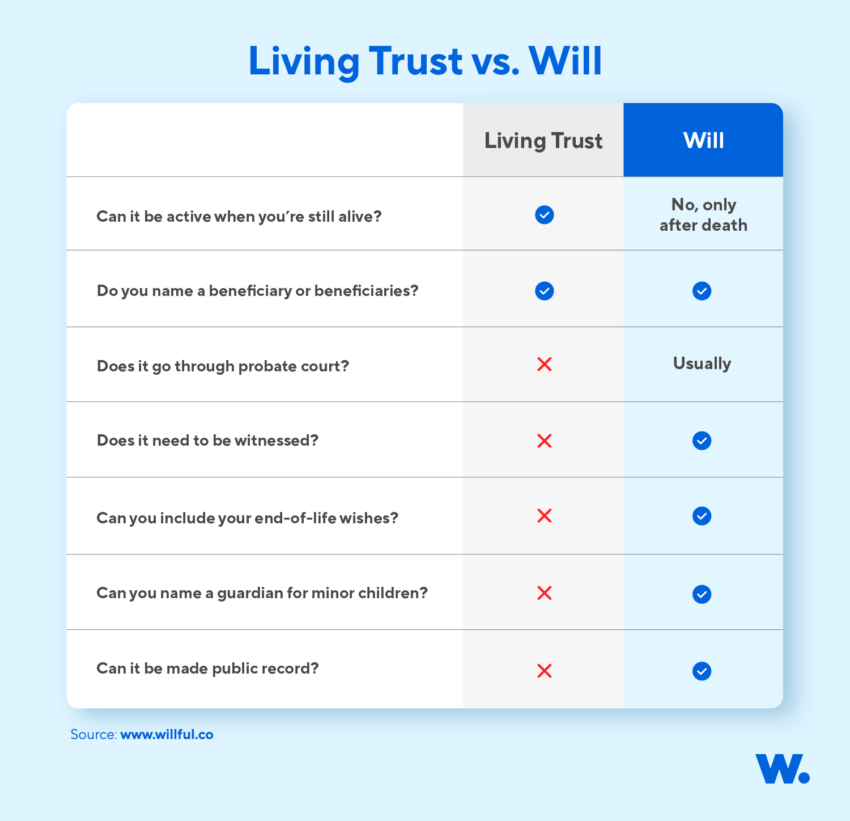
To determine which legal instrument best fits your estate, consider how they compare across key operational legal metrics:
| Legal Parameter | Last Will and Testament | Revocable Living Trust |
| Probate Avoidance | No. Must go through probate court. | Yes. Bypasses probate completely. |
| Privacy Protection | Low. Becomes a public court document. | High. Remains entirely private. |
| Effective Date | Valid only after death. | Valid immediately upon execution. |
| Incapacity Control | None. Requires separate Power of Attorney. | Integrated seamless asset management. |
| Minor Guardianship | Yes. Primary document for naming guardians. | Cannot name legal guardians directly. |
| Upfront Attorney Cost | Lower initial cost; higher post-death fees. | Moderate upfront cost; avoids probate fees. |
4. Why Asset Funding Is Critical for Living Trusts
A common estate planning mistake is creating a trust document but failing to fund the trust.
  [Trust Created] ──(Fails to retitle property)──► [Assets Remain in Personal Name]
                                                            │
                                                            ▼
                                                [Probate Still Required!]
To make a revocable living trust effective, your estate planning attorney must assist you in retitling assets. This involves re-deeding real estate into the trust’s legal name, updating financial account ownership, and realigning beneficiary designations. Unfunded assets remain subject to probate court proceedings upon your death.
5. When Should You Hire an Estate Planning Attorney?
While basic online templates exist, self-drafted estate plans frequently fail due to execution errors, ambiguous language, or non-compliance with state-specific execution laws.
  Consult an Estate Attorney Immediately If You:
  ✓ Own real estate property in more than one state (averts multi-state probate).
  ✓ Have a blended family or stepchildren requiring nuanced distribution rules.
  ✓ Own a closely held business or commercial entity.
  ✓ Intend to disinherit an heir or place restrictions on asset access.
  ✓ Seek to protect beneficiaries with special needs via a Supplemental Needs Trust.
Consulting an experienced wills and trusts attorney ensures your legal documents conform to current state statutes, minimize federal/state tax exposure, and withstand potential legal challenges from third parties.