Introduction: The Adjuster’s True Priority
Shortly after an auto accident, slip-and-fall, or workplace incident, you will likely receive a phone call from an insurance claims adjuster. The adjuster may sound warm, sympathetic, and eager to help you cover your expenses quickly.
However, it is crucial to remember that the insurance adjuster works for the insurance company, not for you. Their primary duty is to protect their company’s profitability by minimizing claim payouts or denying liability altogether.
Knowing how to communicate with adjusters—and understanding what information to withhold—can mean the difference between a denied claim and a fair settlement.
1. Common Insurance Adjuster Tactics to Watch For
Insurance adjusters use proven psychological tactics to minimize payout liabilities:
┌────────────────────────────────────────────────────────┐
│               4 Common Adjuster Tactics                │
└──────┬──────────────┬──────────────┬───────────┬───────┘
       │              │              │           │
       ▼              ▼              ▼           ▼
  [Early Lowball] [Recorded Stmt] [Delay Tactics][Medical Release]
  Quick cash       Trapping you    Dragging out   Accessing full
  for signature    into admitting  time to wear   lifetime medical
  releasing liability      you down       history
-
The Rush Settlement (Lowballing): Offering an immediate cash payout (e.g., $1,500) within days of the accident. In exchange, you sign a liability release waiving all rights to claim future medical expenses.
-
Requesting a Recorded Statement: Asking to record your account of the incident early on, hoping you misspeak, downplay pain, or make statements that suggest shared fault.
-
Broad Medical Authorization Releases: Asking you to sign blanket medical releases, allowing them to dig through years of pre-existing health records to argue your injuries are not new.
-
Shifting Fault: Asking leading questions designed to get you to admit partial responsibility.
2. What NOT to Say to an Insurance Adjuster
To safeguard your claim, avoid these common phrases during early conversations:
-
“I’m Fine” or “I’m Not Injured”: Never say you are unhurt immediately after an accident. Adrenaline masks soft-tissue damage, internal trauma, and neck or spinal injuries that often present hours or days later.
-
“I’m Sorry” or “It Might Have Been My Fault”: Never apologize or speculate about liability. Expressing remorse can be interpreted as an admission of fault under negligence rules.
-
Detailed Estimates of Speed, Distance, or Time: Avoid guessing variables like “I was driving around 35 mph” or “He was 20 feet away.” Incorrect guesses will be used during depositions to undermine your credibility.
-
Speculation About Injuries: Do not attempt to diagnose yourself over the phone. Leave all medical assessments strictly to certified physicians.
3. What You SHOULD Do When Communicating
When speaking with an adjuster prior to securing legal counsel, keep these practices in mind:
  Communication Protocol:
  ✓ Verify adjuster's name, company, and claim number.
  ✓ Provide ONLY basic logistical facts (date, time, location).
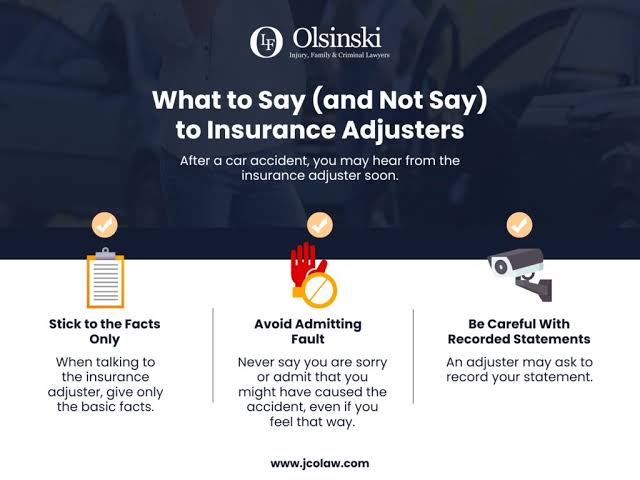
  ✓ Refuse recorded statements politely.
  ✓ State clearly: "My doctors are still assessing my condition."
  ✓ Direct all future communications to your personal injury attorney.
4. Should You Give a Recorded Statement?
No. In almost all third-party liability claims, you have no legal obligation to provide a recorded statement to the at-fault party’s insurance carrier.
Insurers use recorded statements to look for inconsistencies between your initial remarks and formal medical reports. Simply respond: “I am not comfortable providing a recorded statement today. My attorney will handle all formal statements once my medical evaluation is complete.”
5. How a Personal Injury Attorney Handles Adjusters
Retaining legal counsel changes the dynamic immediately:
  [Adjuster Calls You] ──(You Hire an Attorney)──► [Adjuster Must Contact Lawyer]
                                                         │
                                        • No more direct phone calls
                                        • No sneaky recorded statements
                                        • Professional negotiation of claim value
Under legal ethics rules, once an adjuster learns you are represented by counsel, they are legally prohibited from contacting you directly. Your lawyer manages all documentation, protects your records, and presents evidence in a way that maximizes your settlement.
Summary Action Plan
-
Keep a dedicated notebook logging every call from an adjuster (note the date, time, caller name, and summary).
-
Do not sign any document titled Release of Liability or Medical Records Authorization without a lawyer’s review.
-
Focus entirely on your physical recovery and let an attorney handle negotiations.